



The last room: why post-sales value is decided before the contract is signed
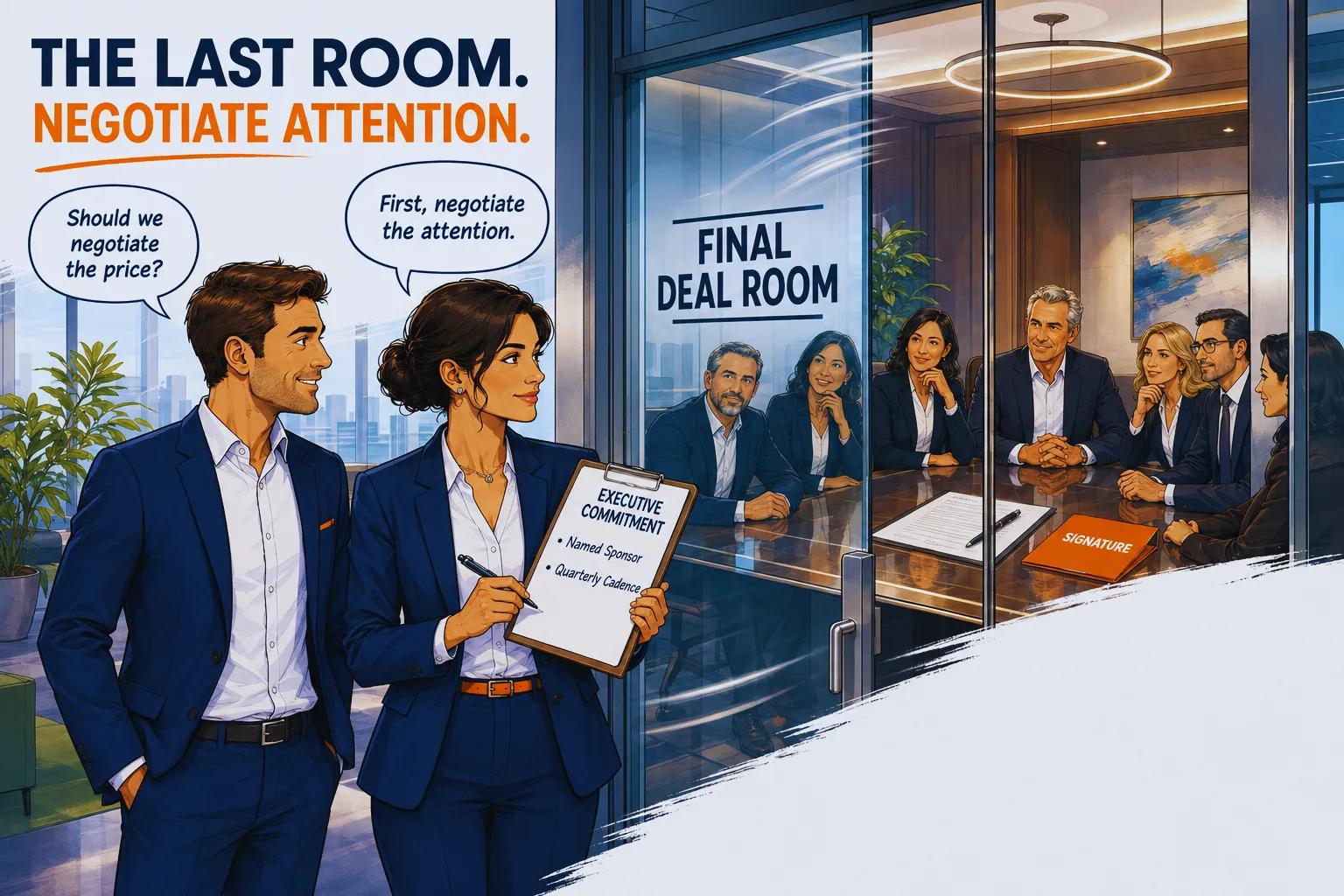
Everyone shows up for the final pre-sales meeting. Almost nobody shows up for month nine. Why executive attention, not adoption, is the scarcest asset in post-sales, and why it should be negotiated like a commercial term.
Number one. In every edition of Prosci's change management benchmarking research since 1998, across nearly three decades of studies, the same factor tops the list of contributors to success: active and visible executive sponsorship. Projects with an extremely effective sponsor meet or exceed their objectives up to three times as often as those with an ineffective one. And in the most recent study, half of participants reported that their sponsors had less than an adequate understanding of their own role.
Twenty-eight years of research, one conclusion worth pinning on every executive floor: the customer's executive is the single biggest success factor of the program, and half the time nobody has told them.
For software vendors, I would push the argument one step further. The scarcest resource in your customer lifecycle is not budget, talent or product capability. It is executive attention on the customer side. And there is exactly one moment in the entire lifecycle when it can be secured: before signature. That moment is the deal room. It is the last room where the customer's C-suite will ever sit with you, and almost everyone in our industry walks out of it having negotiated everything except the one thing that matters.
The attention monopoly
Look at what actually happens in a final pre-sales meeting. The CEO joins for the last thirty minutes. The CFO has read the business case. The sponsor has cleared her afternoon. Decisions that would normally take three steering committees get made in four minutes, because the people who can make them are in the room.
Then the signature dries, and you will never have that room again.
Not because the customer stops caring. Because buying is an event, and operating is a routine. The day the deal closes, executive attention gets reallocated to the next burning problem, and your program, the one they called strategic eight days ago, becomes someone else's job.
A few years ago, I closed one of the largest transformation programs of my career with a European retail group. In the final meeting, the CEO leaned across the table and said: "This is the most strategic program of our three-year plan. You will have everything you need." I believed him. He believed himself. Eight months later, my delivery lead needed thirty minutes with him to unblock a decision his own teams could not make. It took us eleven weeks to get on his calendar. Nothing had gone wrong. He had simply moved on, to the next acquisition, the next crisis, the next deal room. We were no longer the thing being decided. We were the thing being done.
The capital problem of post-sales is not adoption
We tell ourselves the post-sales problem is adoption. Or value realization. Or churn. I no longer believe any of that. Those are symptoms.
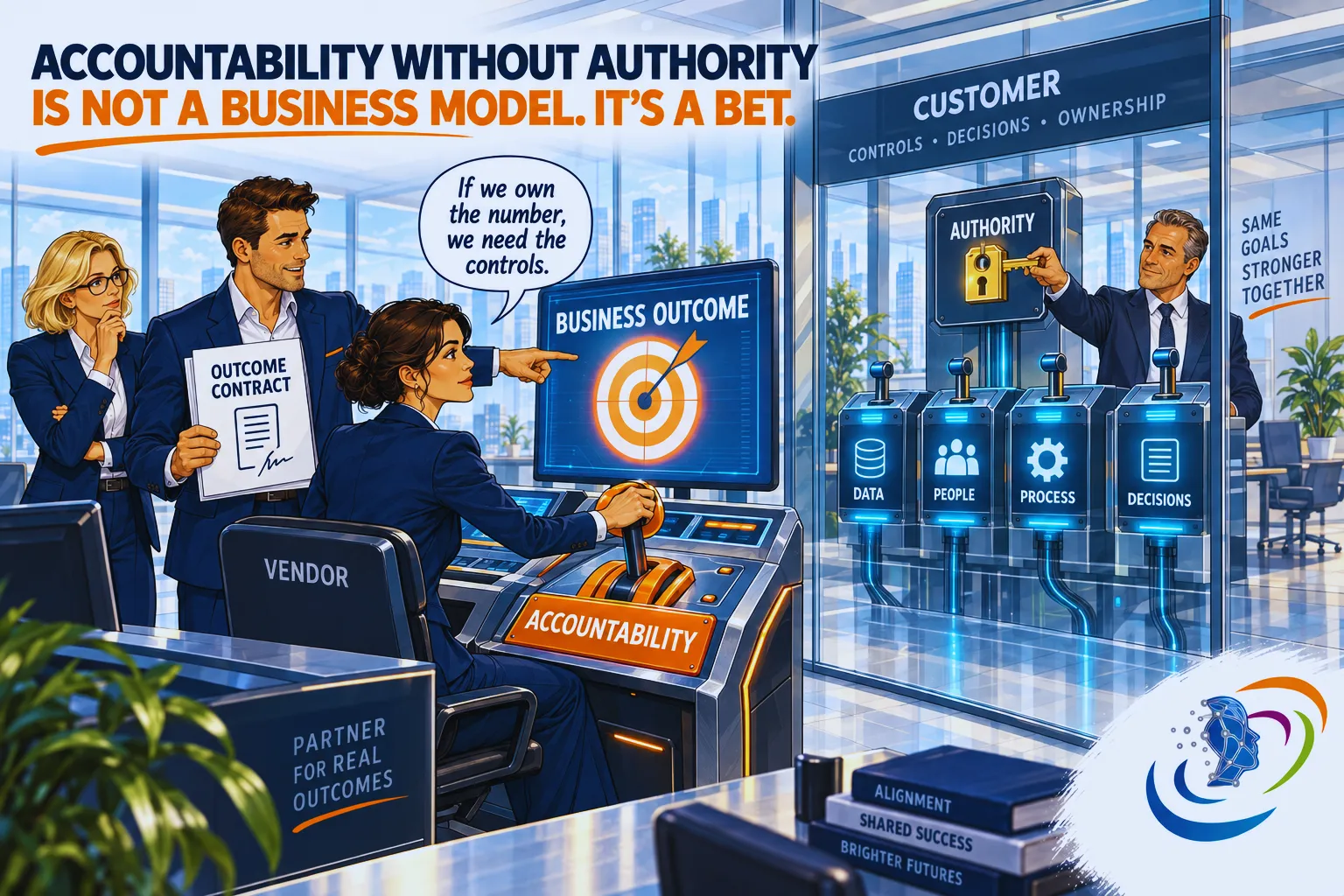
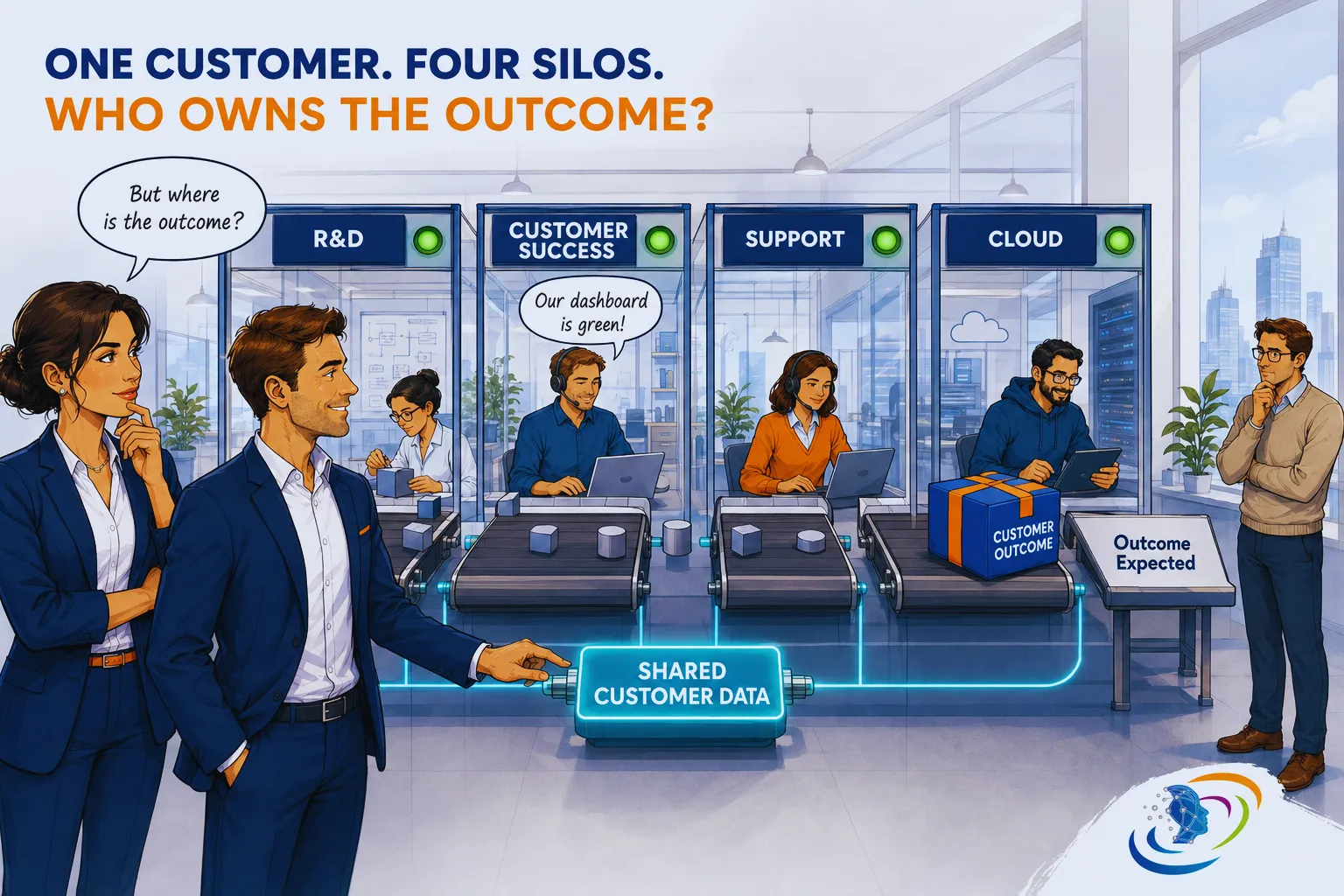
The root problem is executive access. Every hard moment in a customer lifecycle, a stalled deployment, a change-management wall, a renewal at risk, an expansion that needs budget, is resolved by an executive decision on the customer side. And post-sales teams spend their careers begging for the fifteen minutes of executive time that pre-sales got by default.
Here is the asymmetry nobody prices in: everything post-sales will fight for later, sponsorship, arbitration, an adoption mandate, air cover for the internal politics, was available for free in the deal room. After signature, the same attention becomes prohibitively expensive. Sometimes unbuyable.
We negotiate everything except the thing that matters
Look at what we actually negotiate in pre-sales: scope, price, SLAs, penalties, payment terms, intellectual property, liability caps. Armies of lawyers on both sides.
And the single best predictor of whether the customer will get value, sustained executive attention, is negotiated by no one. We contract the deliverables and we hope for the sponsorship.
This is worth saying plainly. The governance page is the most valuable page in the contract, and the industry treats it as boilerplate. I have never seen a program fail delivery because the liability cap was wrong. I have seen many fail because the sponsor named in the kickoff deck had left the building, mentally or literally, by month four.
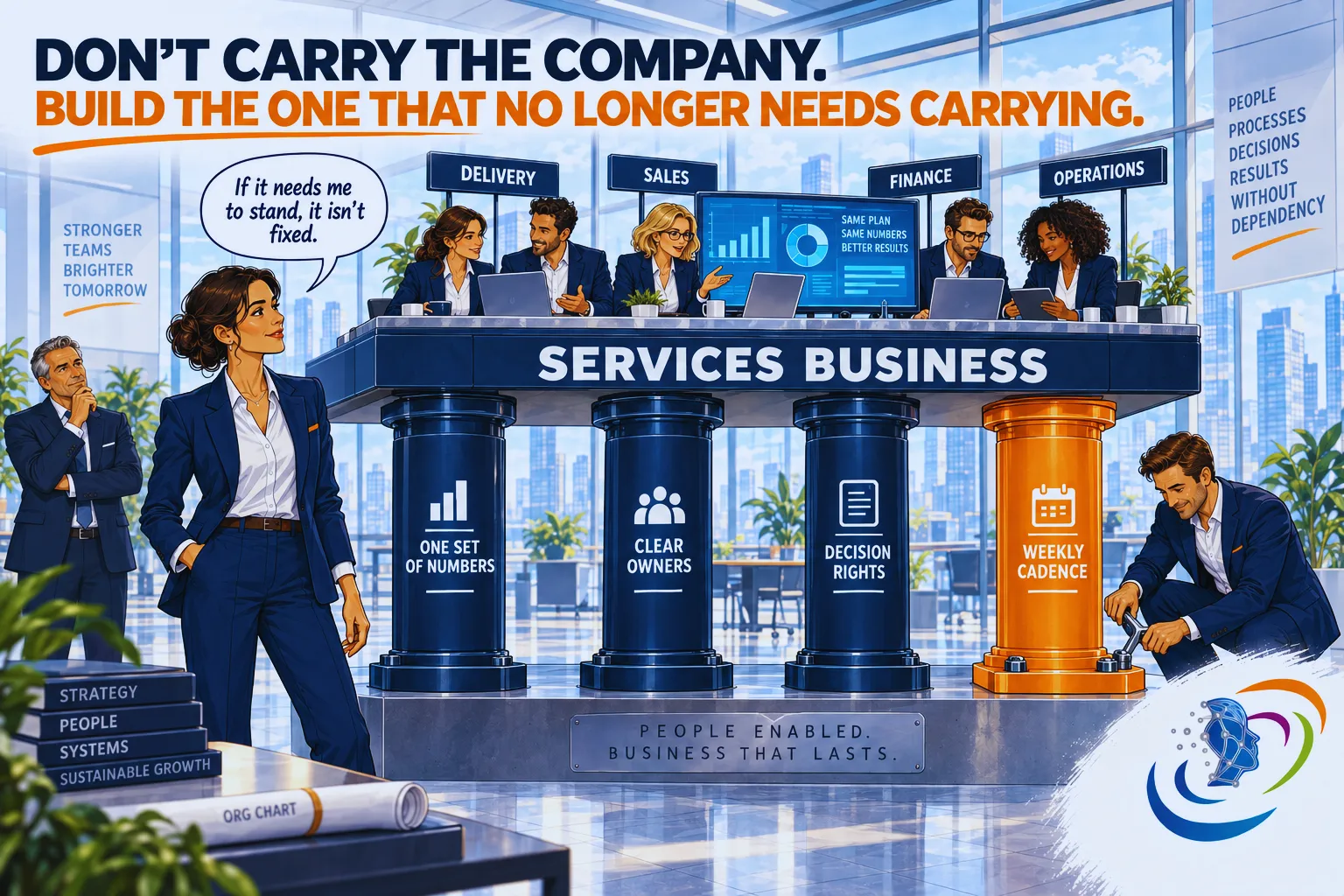
I started applying the opposite discipline when I was leading Professional Services at Adobe. We made executive cadence a condition of engagement, written into the contract, with the customer's obligations spelled out next to ours. Some sales teams hated it. A few deals got harder to close. But over that period the portfolio grew services revenue by 20 percent and revenue per contract by 15 percent, and if you asked me to rank what drove those numbers, I would put contracted governance above any delivery methodology we ever deployed. The accounts where the sponsor showed up every quarter renewed. The accounts where the cadence quietly died were the ones where I spent my fire-fighting budget.
The attendance list is the forecast
As I argued in previous editions, most health scores measure the vendor's comfort rather than the customer's result. They are lagging indicators dressed up as foresight.
The leading indicator is simpler, and it is free: who shows up to the final pre-sales meeting. I have learned more about future churn from the seniority of the people in that last room than from any health score a CS platform has ever produced. A customer whose executives are present at the moment of maximum motivation, and contractually committed beyond it, behaves differently for the next three years. A customer whose executives delegate the final meeting has already told you what month nine will look like. The attendance list is the forecast.
The AI era sharpens this on both sides. As routine interactions get automated, agent-led onboarding, AI-deflected support, digital success motions, the human executive relationship becomes the residual scarcity, the one asset in the account that cannot be synthesized. And the same telemetry that feeds your agents can finally instrument what was previously invisible: sponsor engagement can be measured, trended and escalated like any other risk signal, instead of being discovered at renewal.
Five moves for the executive committee
If I were structuring this for an executive committee this quarter, five moves.
- Put attention in the order form. A named executive sponsor, a quarterly executive cadence, and an escalation path with names on it, written as commercial terms next to scope and price. If it is not contracted, it does not survive contact with the customer's Q3.
- Contract the customer's obligations, not just yours. Every contract lists what the vendor owes in exquisite detail and what the customer owes in a paragraph. Value is co-produced; the paper should say so. Data access, decision timelines, sponsor availability, change-management ownership: written, named, dated.
- Make the attendance list a scored qualification criterion. Deal reviews scrutinize budget, timeline and competition. Add one line: which customer executives attended the final meetings, and what have they personally committed to. Weight it in the forecast. It will outperform most of what is already in the model.
- Be willing to walk on attention, never on price. If a customer will not commit one hour of executive time per quarter before signing, at the moment their motivation peaks, month nine is already written. The deals that die because you asked for a sponsor cadence were going to die anyway; you found out while the cost was an email instead of a two-year unprofitable delivery.
- Instrument executive engagement like a risk signal. Sponsor attendance, decision latency, escalation response times: measurable today, trivially so with AI reading the account signals. Put it on the same dashboard as consumption and adoption, and review it in the same meeting.
The deal room, redefined
Stop thinking of pre-sales as the top of the funnel. It is something much more valuable: the single moment of maximum leverage over the entire customer lifetime. The one room where attention, ambition and authority are all present at once, and the last one.
The vendors that win the next decade of post-sales will not be the ones with the best health scores. They will be the ones that understood that customer value is co-produced with executives who stay in the room, and who made staying in the room part of the deal.
You negotiate scope in that room. Scope was never the scarce resource. Negotiate attention.
This article is adapted from edition #13 of my LinkedIn newsletter, Professional Services & Tech. Subscribe on LinkedIn to receive future editions.
Sources:
Prosci, "Best Practices in Change Management" benchmarking research (12th edition) and
"The Primary Sponsor's Role and Importance"; McKinsey & Company,
"Introducing customer success 2.0: the new growth engine".
Mathilde HENRY
Executive Leader in Enterprise Software & AI Transformation. 20 years working at the intersection of software, consulting and business transformation.