




You Are Paying Double for Growth you Already Own

Here is a number your board should see before it approves next year's sales budget.
The median B2B SaaS company now spends 2.00 dollars in sales and marketing to acquire 1.00 dollar of new annual recurring revenue. That figure rose 14 percent in a single year, according to Benchmarkit's 2025 SaaS Performance Metrics report, which covers roughly a thousand private companies. The bottom quartile spends 2.82 dollars. Nearly three dollars out for one dollar back, and there are more companies in that quartile than anyone likes to admit.
Now the second number. Generating that same dollar of ARR from an existing customer costs 1.00 dollar. Half price. Same revenue, same recognition, same contribution to the growth rate your investors are pricing.
Two dollars, or one dollar. Most companies keep choosing two. Not because the math is unclear. Because the cheap dollar has no owner.
The acquisition engine is getting worse, not better
Before addressing the ownership problem, it is worth sitting with the trajectory, because the 2.00 dollar figure is not a bad year. It is a trend line.
Customer acquisition costs in B2B SaaS have surged over 220 percent across the past eight years. The average enterprise sales cycle has stretched to 134 days, up from 107 in early 2022. Median CAC payback for private SaaS now sits around 20 months, meaning a company operates at a loss on a new customer for nearly two years before the acquisition investment breaks even. Any customer who churns inside that window is not reduced profit. It is a straight capital loss, acquisition cost plus onboarding plus support, multiplied across every account that leaves early.
Meanwhile the revenue those customers bring is getting less durable. Gross revenue retention has slipped from 90 to 88 percent across the industry, and roughly three quarters of software companies reported declining retention in 2024. Median growth for private B2B SaaS has compressed to 26 percent. Companies are paying more, waiting longer, and keeping less.
Against that backdrop, one line in the Benchmarkit data stands out. The blended CAC ratio, which mixes new logo and expansion ARR together, actually improved last year, landing around 1.40 dollars. That improvement came almost entirely from mix: expansion ARR now represents 40 percent of all new ARR, up 5 points in a single year. The cheap dollar is quietly bailing out the expensive one, and the blended reporting most boards receive lets it happen without anyone noticing.
The expensive dollar has an army. The cheap one has a committee
Look at how a typical SaaS company is organized around each of these two dollars.
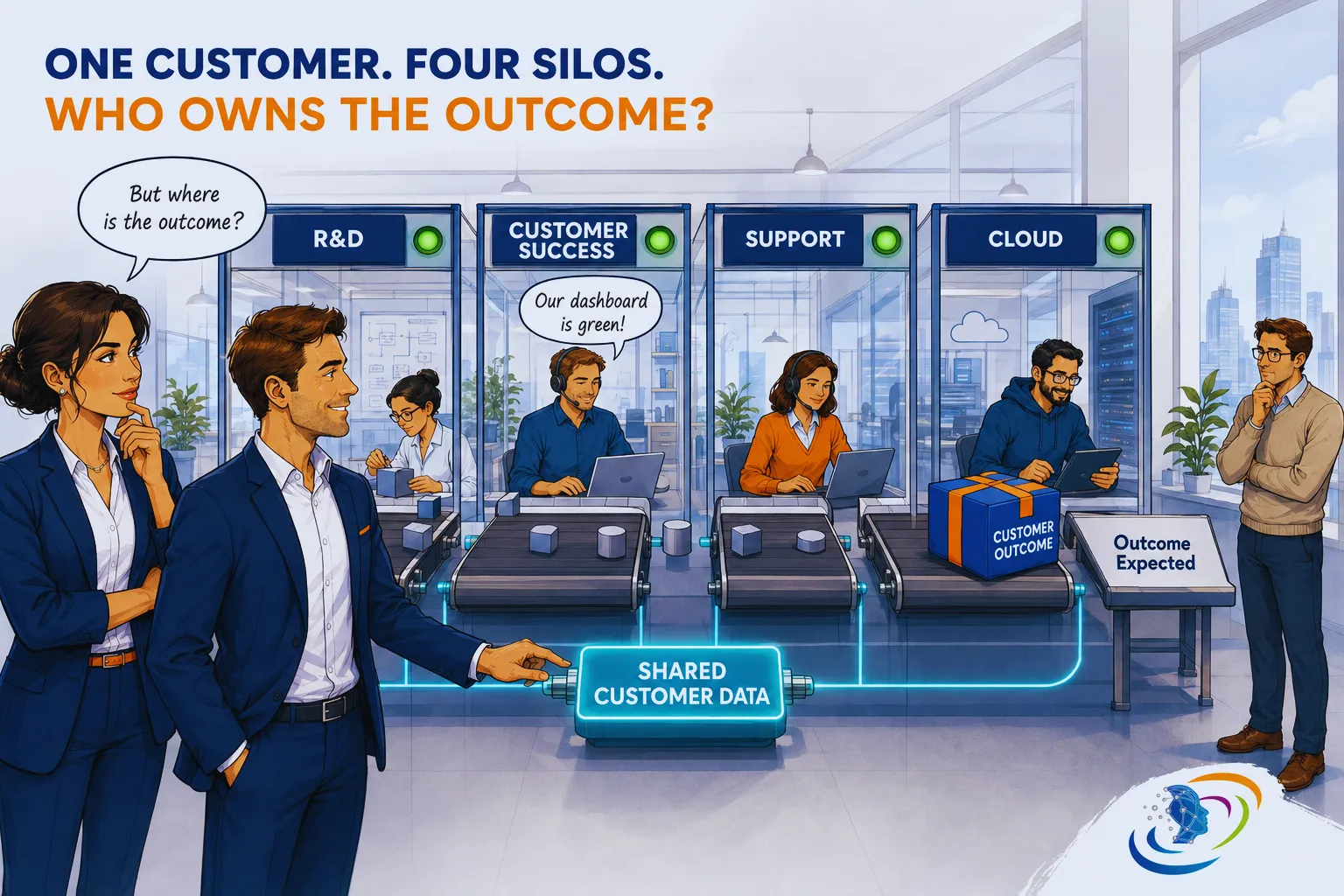
The new logo dollar has a CRO, a pipeline, a forecast reviewed weekly, a compensation plan engineered to the decimal, a tech stack, a hiring plan, and a permanent slide in the board deck. The expansion dollar has a debate. ChurnZero's research puts the split plainly: customer success leaders say their teams own expansion in 37 percent of companies, sales claims it in 25 percent, and the rest floats in hybrid arrangements where sales wants the credit, customer success holds the relationship, and the account executive who closed the original deal still hovers over the account. Other surveys draw the lines differently, with Customer Success Collective finding nearly half of CS teams claiming full expansion responsibility, but the disagreement between the surveys is itself the finding. The industry cannot even agree on who owns its cheapest source of growth.
This is not an operational detail to be settled two levels below the executive team. It is a capital allocation failure. Forrester finds that renewals and expansions already account for more than 60 percent of B2B revenue. When the majority of your revenue and 40 percent of your new ARR flow through a motion with no clear owner, no dedicated forecast, and compensation rules that get renegotiated deal by deal, the leakage is not hypothetical. It is structural, and it compounds.
The scale effect makes it worse. Past 50 million in ARR, more than half of new ARR comes from the installed base. Past 100 million, roughly two thirds. The bigger the company, the more its growth depends on the motion nobody governs. Which means the companies with the most enterprise value at stake are precisely the ones running their dominant growth engine on improvisation.
Expansion is not UPSELL. It is evidence
Here is where most attempted fixes go wrong, and why simply reassigning the quota does not work.
The reflex is commercial. Give the CSMs a number, run an upsell campaign into the base, add an expansion SKU to the sales kit, schedule more QBRs. The results disappoint, the CSMs burn relationship capital pushing offers their customers did not ask for, and everyone concludes the installed base was tapped out.
It was not. The sequence was backwards.
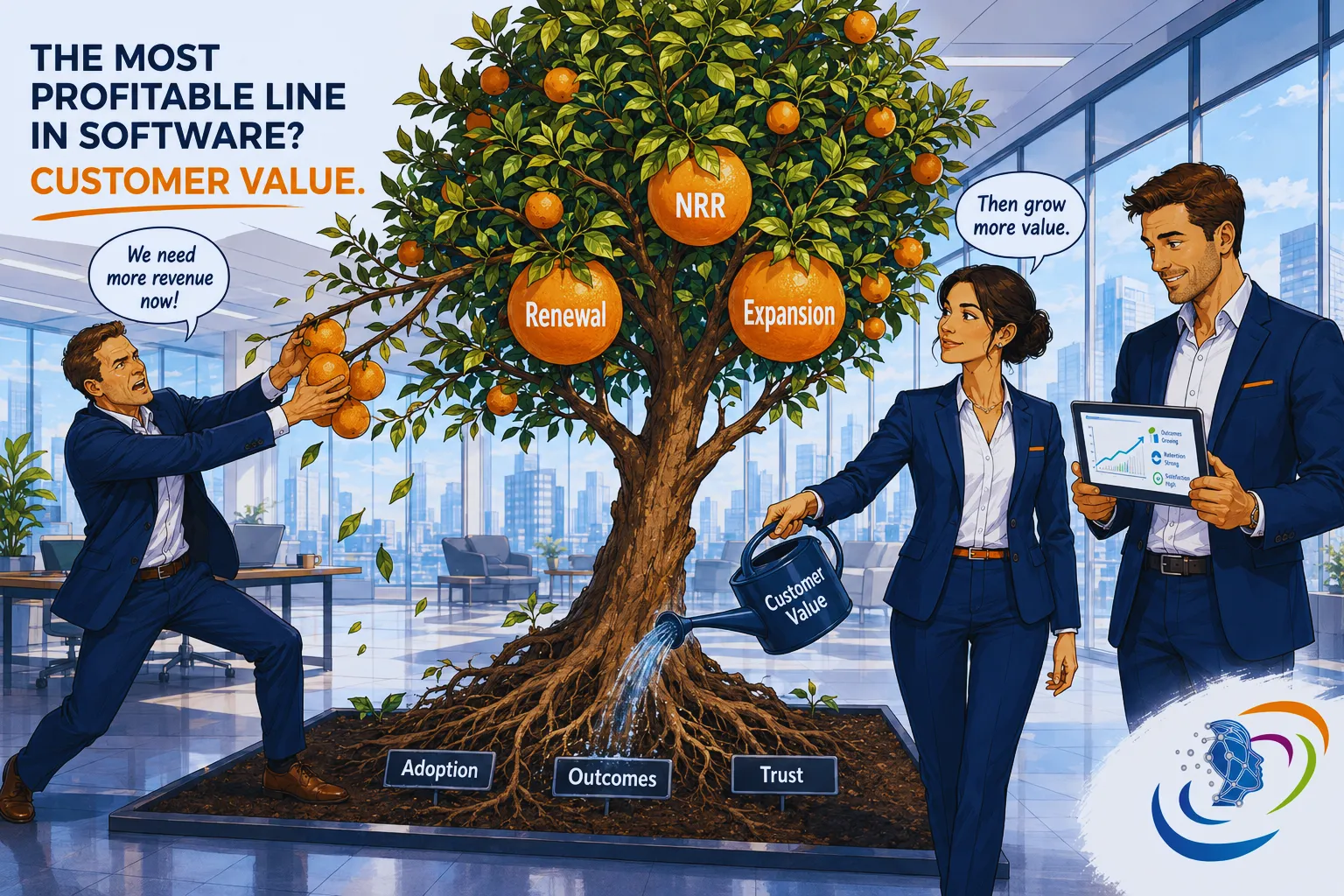
A customer expands for one reason: the value of the first purchase has been demonstrated, quantified, and acknowledged by the people who sign budgets. Expansion is not a pitch. It is the invoice you send against proof. No proof, no expansion, no matter how well the QBR deck was designed or how aggressively the quota was set.
This is why delivery is the real expansion engine. The teams doing onboarding, driving adoption, and documenting outcomes are not a cost line sitting below the revenue teams. They are manufacturing the evidence that makes the next dollar cost 1.00 instead of 2.00. When I review post-sales organizations, the pattern is remarkably consistent. The companies struggling with expansion almost never have a sales problem. They have a value proof problem. The usage dashboards exist. The health scores exist. But nobody can show the customer's CFO, in the customer's own numbers, what the product earned them last year. So the renewal becomes a price negotiation and the expansion proposal lands as an unsolicited pitch.
The research backs the sequence. TSIA's 2025 State of Customer Growth and Renewal found that when post-sales teams carry expansion responsibility, growth rates and renewal rates rise together. Not as a trade-off. Together. The same discipline that proves value also protects it. Gainsight's 2025 Customer Success Index found that 93.7 percent of companies measuring CS impact now attach a revenue target to it, which confirms the direction of travel. But a target without an evidence machine underneath it is just pressure, and pressure applied to a relationship without proof produces churn, not growth.
What the multiple says
If the cost argument does not move your board, the valuation argument will.
Companies holding net revenue retention above 120 percent command revenue multiples of 10 to 12x, against 6 to 8x for companies sitting at 100 percent, per Alexander Group's benchmarking. Run that spread on a 20 million ARR company and the difference in enterprise value exceeds the entire sales and marketing budget, several times over. McKinsey's analysis of more than a hundred B2B SaaS companies found top-quartile performers reach 113 percent NRR, growing double digits from existing customers alone before a single new logo closes. Companies above the 106 percent NRR threshold grow roughly two and a half times faster than those below it.
Every point of NRR is an enterprise value decision. And NRR is built almost entirely after signature, in the quality of onboarding, the speed to first outcome, the rigor of value documentation, and the governance of the expansion motion. This is the core argument I keep making in this newsletter and with every executive team I work with: post-sales is not where revenue is serviced. It is where enterprise value is created or destroyed.
For PE operators, this is the sharpest diligence lens I know. Ask one question in the first management meeting: who, by name, owns the expansion number, and what evidence machine sits underneath it? If the answer takes more than one sentence, the growth assumptions in the model are a hope, not a plan. Conversely, an operating partner who installs single-name expansion ownership and a value quantification discipline in the first hundred days is buying growth at half price and selling it at a premium multiple.
The governance fix fits on one page
None of this requires a reorganization, a platform purchase, or a consulting engagement measured in quarters. It requires three decisions that only the executive team can make.
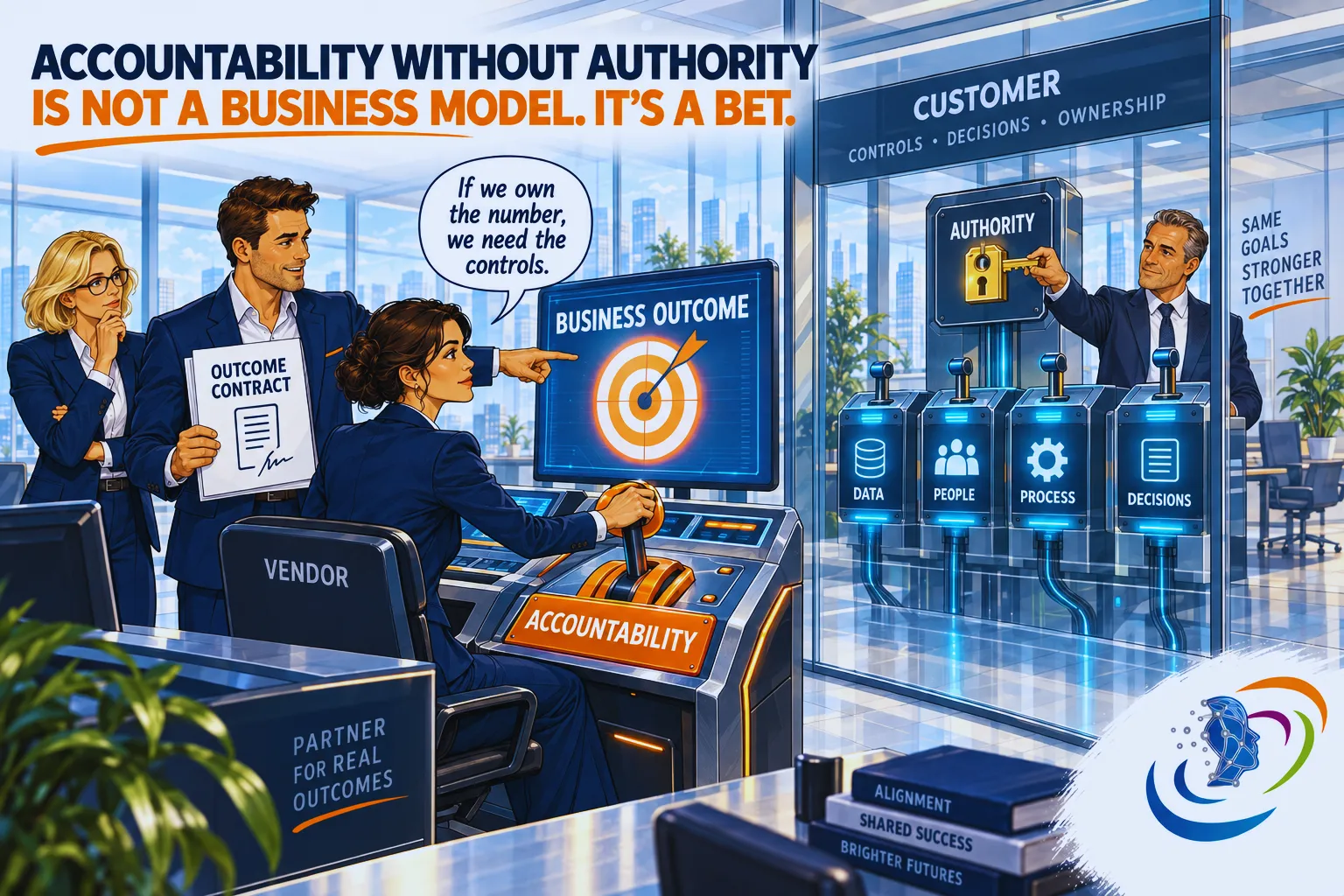
First, put a single name on expansion per account, with authority over both the renewal and the growth path. Not a committee, not a pod, not a shared metric. A name. Diffuse ownership is measured leakage, and every study of expansion performance converges on the same point: when ownership is explicit, expansion gets prioritized and measured, and what gets measured gets done.
Second, fund value proof as infrastructure. A value engineering capability that quantifies realized outcomes, in the customer's currency, validated with the customer's own stakeholders, at least twice a year for every strategic account. This is the machine that converts delivery spend into pipeline. It is also the single investment that improves renewal price integrity and expansion conversion simultaneously, because both run on the same evidence.
Third, report the two CAC ratios separately at board level. New logo at 2.00 and expansion at 1.00 tell two different stories about the same company. Blending them into one number is how organizations hide an acquisition problem behind a retention success, or starve the cheap dollar to feed the expensive one. Unblending them costs nothing and makes the capital allocation question unavoidable, which is exactly what a board is for.
The cheapest growth in your company is sitting inside contracts you have already signed. It costs half as much, converts faster, compounds quarter after quarter, and flows directly into the multiple. It just needs what every other revenue stream already has: an owner.
Growth is won after signature.
Mathilde Henry — Global C-Level Consulting Executive | Professional Services & Value Delivery | GenAI | SaaS | Digital Transformation | Private Equity | Pre-IPO | 9-digit P&L | Hypergrowth | Cost Efficiency